The world is under-sensed
Humans see a thin slice of reality. Robots mostly inherit the same limitation through cameras, lidars, and sparse industrial sensors.
investor / partner pitch
Luxnode builds cheap modular sensors that give people and robots access to signals beyond ordinary sight: spectra, fields, atmosphere, motion, and eventually the full messy context of the physical world.
thesis
Humans see a thin slice of reality. Robots mostly inherit the same limitation through cameras, lidars, and sparse industrial sensors.
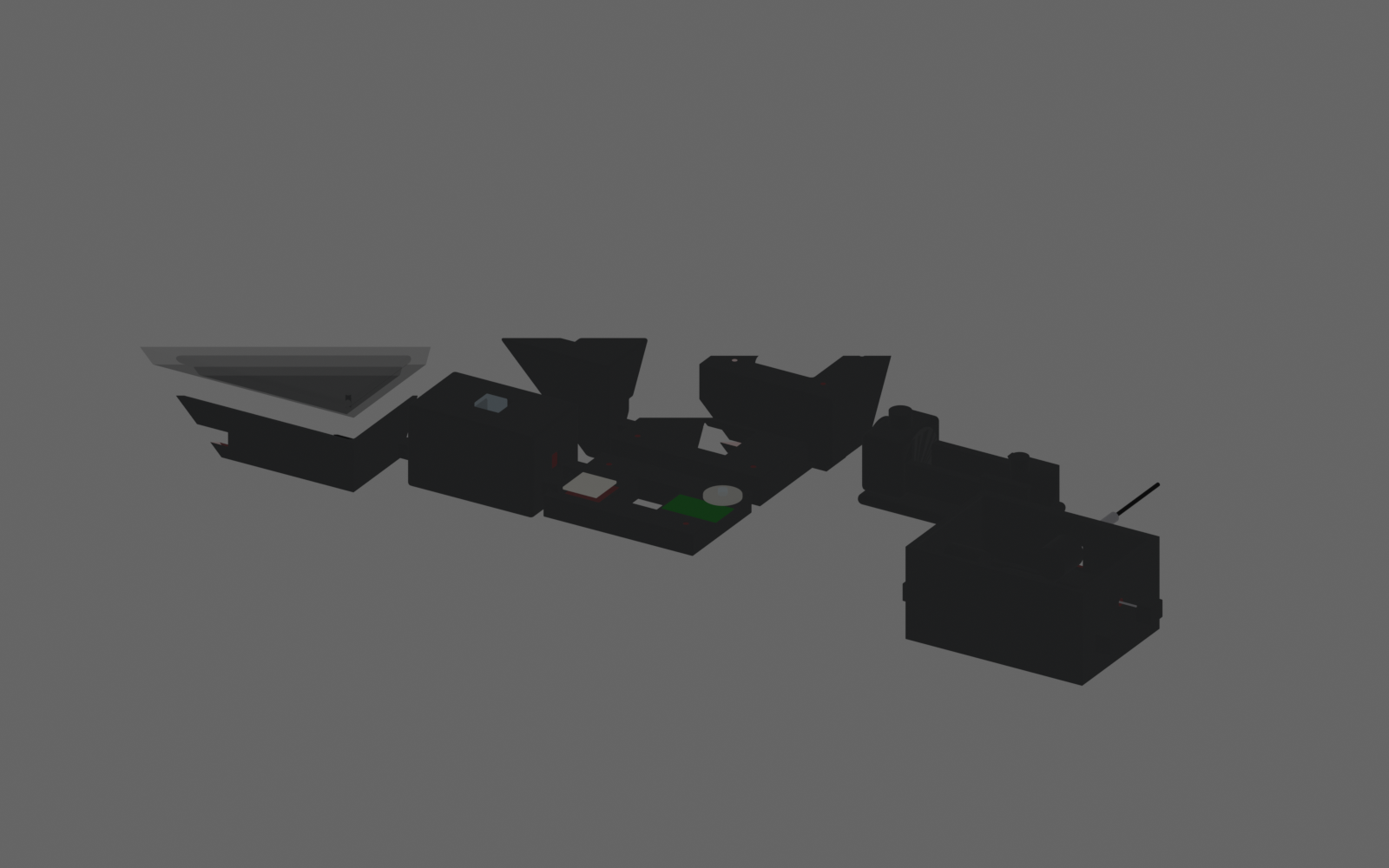
Luxnode starts with spectroscopy modules, then expands into electromagnetic, magnetic, humidity, altitude, motion, and wearable data streams.
Each sensor must solve a job for its owner first. The compounding asset is calibrated field data that can teach robots what humans cannot directly observe.
Independent sensor heads make the business easier to fund, the product easier to test, and future robot integrations easier to assemble.
buyer personas
Needs an affordable hands-on spectroscopy lab for Beer-Lambert demos, plant pigments, food dyes, light spectra, and student projects. Buys when the kit is easier to teach than a research instrument.
best first buyerWants sensors that make a robot more interesting than camera-only perception. Buys a module when students can mount it, log data, and use Python without fragile lab procedures.
fast demo buyerBrewers, kombucha makers, oil sellers, growers, and small food operators can use relative scans for batch comparison and anomaly flags. No compliance claims, just trend and QA support.
paid pilot buyerAstronomy clubs, geology clubs, and library makerspaces value visible experiments, shareable datasets, and low-cost accessories more than high spectral resolution.
community proofTAM / SAM / SOM
Robots need richer perception, and field users need cheap measurement tools. IFR reports 4.66M industrial robots already operating worldwide, with new installations expected to pass 700k units by 2028.
Millions of robots plus many more human-operated toolsThe reachable wedge is robotics developers, labs, farms, food and beverage makers, geologists, schools, astronomy users, and small manufacturers that can buy a low-cost sensor without enterprise procurement.
First 50k-100k sensor/module customersThe credible first capture is narrow: 250 devkits, 1,000 external modules, 25 paid pilots, and a small library of well-labeled spectra and environmental traces.
18-month pilot-to-product wedgemarket sizing math
This is not a near-term revenue plan. It shows why cheap attachable sensing can matter if robot perception keeps expanding.
This is the realistic wedge because 15 nm-class spectroscopy is good for learning, comparison, and demos.
The first win is not revenue scale. It is paid usage, labeled samples, repeat demos, and buyer quotes.
competitors
380-950 nm, 5 nm FWHM, education-only purchasing.
Strong classroom incumbent. Luxnode must win on modular attachments, open data, lower-cost expansion, and robot-friendly workflows.390-950 nm visible scans, fluorescence excitation, education workflow.
Similar school buyer. Luxnode should avoid a spec war and sell the expandable sensor-stack story.Better optics, calibration, support, and research-grade options.
Not the first battlefield. Luxnode is for cheap distributed sensing, not replacing lab instrumentation.Cheap and accessible, but fragmented calibration and weak repeatability.
Luxnode wins if it is still affordable but much easier to repeat, sync, and attach to real workflows.model
The sensor must be valuable before the robot exists in the loop: identify materials, compare batches, monitor plants, capture spectra, log the environment, or teach a class. The robot dataset comes from repeated useful human workflows.
ask
The near-term ask is not a moonshot budget. It is a small number of serious pilot partners in robotics, food and beverage, agriculture, geology, education, and astronomy who will pay for a sensor, label real samples, and help define repeatable workflows.
source notes
Industrial robot installations, stock, and 2028 outlook.
Toronto commercialization network for science and technology companies.
Toronto AI ecosystem with research, talent, startups, and industry partners.
Education spectrometer benchmark: $499, 380-950 nm range, 5 nm FWHM.
Education spectrometer benchmark: $479, 390-950 nm visible scans.
Local education and maker-channel counts for the Toronto-first wedge.